Source Cold Drawn Polished Aluminium Strip for Ceiling, Doors, and Windows
Find 30 listings for Cold Drawn Polished Aluminium Strip suitable for suspended ceilings, door and window frames, and decorative applications. Buyers can compare grades, thicknesses, and surface finishes from verified suppliers.
Key considerations
Products List


China Factory Price Mill Finish Hot/Cold Rolled Aluminum Strip for Building Material
$3500.00 - $3800.00
MOQ: 1 Tons


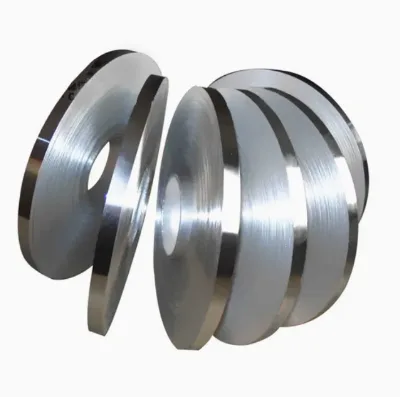


Comprehensive Sourcing Guide
Strategic Sourcing Guide for Cold Drawn Polished Aluminium Strip
Understanding the Product Landscape and Technical Variability
When initiating a procurement strategy for Cold Drawn Polished Aluminium Strip, buyers must first recognize that the term "cold drawn" often intersects with broader processing categories such as cold rolling and slitting in the global market. The supplied product data indicates a diverse range of manufacturing techniques, including "Color Coated," "Power Coating," "Spray Coating," and specifically "PVDF" finishes, alongside "Mill Finish" and "Cold Rolling." While the core keyword emphasizes "cold drawn," the available market data suggests that suppliers frequently offer "Aluminum Coil Strip" and "Color coated aluminum strip" where the surface finish is achieved through "Brush," "Mirror Silver," or "Colorful Painted Prepainted" processes.
The technical specifications for these materials vary significantly based on the intended application. The observed thickness range for general aluminium strips spans from 0.16mm to 1.6mm, with specific standard thicknesses often cited as 0.6mm, 0.7mm, 0.8mm, 0.9mm, and 1.0mm. For specialized applications like curtain walls or external walls, panel thicknesses may be standardized at 4mm, though this is distinct from the thin strip format. The width of the product is equally critical, with observed ranges extending from 30mm up to 1600mm, and many suppliers offering fully "Customized" widths to meet specific project requirements.
Buyers should note that the "Alloy" and "Grade" of the aluminium are fundamental to the material's performance. The market data lists a wide spectrum of grades, including the 1060, 1050, and 1100 series (pure aluminium), the 3003 and 3105 series (aluminium-manganese), and the 5052 series (aluminium-magnesium). Additionally, "8000 Series" and generic "Alloy" designations appear in product listings. The temper of the material is another crucial variable, with observed statuses ranging from "O" (annealed) to various hardening states like "H16," "H18," "H24," and up to "H112." This variability means that a "cold drawn polished" specification must be rigorously defined against the specific alloy and temper required for the end-use application to ensure mechanical integrity.
Compliance, Certification, and Regulatory Standards
Navigating the compliance landscape for aluminium strip procurement requires a clear understanding of the certifications and standards that validate product quality and safety. The supplied product facts highlight several key certifications that are frequently associated with these materials, including "CE," "ASTM," "ISO," "Green Leaf," "RoHS," "ISO9001," "JIS," "GB," "EN," and "ASTMB." These certifications are not merely marketing labels but serve as evidence of adherence to specific manufacturing and safety protocols.
For buyers targeting international markets, the presence of "CE" certification is often a prerequisite for products entering the European Economic Area, while "RoHS" compliance is essential for electronics and applications involving restricted hazardous substances. The "ISO9001" standard indicates a certified quality management system, ensuring consistent production processes. Furthermore, specific industry standards such as "ASTM B209," "EN573," and "EN485" are mentioned in the broader context of aluminium specifications, though buyers must verify that the specific supplier's product meets these exact standard versions relevant to their region.
The "prod_standard" field in the data notes "Customization" as a standard, alongside specific references to "ASTM, GB, JIS." This suggests that while many suppliers adhere to established international norms, there is a significant market segment that operates on custom specifications. Buyers must explicitly request documentation proving that the "cold drawn" or "polished" process adheres to the relevant national or international standards for the specific alloy grade being purchased. For instance, if the application involves food contact or strict environmental regulations, the "Green Leaf" or "RoHS" certifications become non-negotiable. The absence of a specific certification in a product listing does not necessarily imply non-compliance, but it requires the buyer to request third-party test reports to verify the claim.
Cost Drivers and Pricing Dynamics
The pricing structure for Cold Drawn Polished Aluminium Strip is influenced by a complex interplay of raw material costs, processing complexity, and order volume. The observed price range in the market is vast, spanning from $0.70 to $4,000 USD. This extreme variance is not indicative of a single product type but rather reflects the difference between raw coil stock, finished polished strips, and specialized coated products. A price at the lower end of this spectrum likely corresponds to basic "Mill Finish" or uncoated "Aluminum Coil" in standard thicknesses, whereas prices at the higher end may reflect specialized "PVDF" coatings, custom polishing to "Mirror Silver" standards, or small-batch custom orders.
Several specific factors drive these costs. First, the "Technique" employed significantly impacts the price. Processes like "PVDF" coating, which requires a thickness of not less than 25 microns, or "PE" coating with a thickness of not less than 18 microns, add substantial value and cost compared to a simple "Cold Rolling" or "Mill Finish." The "Surface Finishing" method, whether it involves "Coating," "Brush," or "Spray Coating," also dictates the final price. Second, the "Alloy" grade plays a role; alloys with higher magnesium or manganese content (like 5052 or 3003) generally command a premium over pure aluminium grades (1050, 1060).
The "MOQ" (Minimum Order Quantity) is another critical cost driver. The observed MOQ range is 1 to 1000 units, with some listings indicating an MOQ of 0, which suggests flexibility for sample orders or very small batches. However, buyers must be aware that ordering below the standard industrial MOQ often incurs a higher unit price. The "Packing" method, such as "Sea Worthy Packing" or "Wood Pallets," also adds to the logistics cost. Additionally, the "Customization" availability allows for tailored dimensions but typically increases the unit cost due to the setup time required for slitting machines and coating lines. Buyers should request a detailed breakdown of costs, separating the base material price from processing, coating, and packaging fees to understand the true value proposition.
Typical Applications and Performance Requirements
The versatility of Cold Drawn Polished Aluminium Strip is evident in its wide array of applications, ranging from structural building components to decorative finishes. The product data explicitly lists "Curtain Wall," "External Wall," "Advertising," and "Interior" as primary usage areas. In these contexts, the material often requires specific functional attributes such as "Fireproofing," "Anti-Bacterial," "Anti-static," and "Mould-proof" properties. These functional claims are particularly relevant for the "Color coated aluminum strip" used in architectural cladding, where durability and safety are paramount.
Beyond construction, the material is extensively used in ceiling systems. The data highlights applications for "Suspended Ceiling," "False Ceiling," "Lay-in Ceiling," "Ceiling Tiles," "Grid Ceiling," and "Open Cell Ceiling." In these applications, the "Thickness" of 0.2mm to 1.6mm and the "Surface" finish (e.g., "Brush" or "Mirror Silver") are critical for both aesthetic appeal and acoustic performance. The "Corrugated Aluminium Sheet for Roofing" is another significant application, where the material's ability to be "Cold Rolled" and formed into specific profiles is essential for weather resistance and structural strength.
In the transportation and industrial sectors, the strip is utilized for "Transportation Tools," "Door & Window," "Glass Wall," "Heat Sink," and "Decorations." The "Alloy" selection here is crucial; for example, heat sinks often require specific thermal conductivity associated with the 1000 or 3000 series alloys. The "Function" of the product as an "Aluminum Strip" for general industrial use implies a need for high precision in dimensions and surface quality. Buyers must match the specific application requirements with the correct "Temper" and "Surface Treatment." For instance, a "Heat Sink" application might require a "Mill Finish" for optimal thermal transfer, whereas a "Curtain Wall" might demand a "PVDF" coating for UV resistance and color retention.
Supplier Evaluation and Operational Capabilities
Evaluating a supplier for Cold Drawn Polished Aluminium Strip requires a deep dive into their manufacturing capabilities and operational standards. The data indicates that suppliers utilize specific equipment such as "Advantage Slitting Machine" and "Aluminum Cast Roll" technology. The "Technique" of "Aluminum Cold Rolling" and "Casting" suggests a vertically integrated production process, which can be a positive indicator of quality control. Buyers should verify the supplier's capacity to handle "OEM & ODM" requests, as the data confirms that customization is "Acceptable" and "Available."
The "Product Name" variations, such as "Aluminum Coil Strip" and "Color coated aluminum strip," suggest that suppliers may offer a broad portfolio. Buyers should ensure that the supplier has specific expertise in "Cold Drawn" processes if that is a strict requirement, as the data also lists "Cold Drawn" alongside "Cold Rolling." The "prod_model" designations, such as "3000 series" or "KWAS-063," serve as identifiers for specific product lines, and buyers should request detailed technical datasheets for these models to confirm they meet the project specifications.
Logistics and packaging are also key evaluation criteria. The "prod_packing" methods listed include "Sea Worthy Packing," "Wood Pallets," and "Eye to Sky/Eye to Wall." These methods indicate a focus on protecting the material during transit, which is vital for preventing surface damage, especially for polished or coated strips. Buyers should inquire about the supplier's "Location," which is noted as "China" in the provided data, and assess their logistics network to ensure timely delivery. The "Status" of the product, including various tempers like "O, H16, H18, H24," should be clearly documented in the supplier's inventory to ensure availability.
Quality Control and Long-Term Procurement Strategy
Implementing a robust quality control (QC) strategy is essential for securing a reliable supply of Cold Drawn Polished Aluminium Strip. The "Surface Treatment" options, ranging from "Mill Finish" to "PVDF" and "PE" coatings, require specific inspection protocols. For coated products, the "Coating Thickness" is a critical quality metric, with standards specifying "PVDF: Not Less Than 25um" and "PE: Not Less Than 18um." Buyers must insist on mill test certificates that verify these thickness measurements and the uniformity of the coating.
The "Function" attributes like "Fireproofing" and "Anti-Bacterial" require verification through independent testing. While the product data lists these functions, buyers should not assume every listed product satisfies these claims without specific test reports. The "Certification" status, including "ASTM," "ISO," and "RoHS," should be cross-referenced with the specific batch of material being purchased. Long-term procurement considerations involve establishing a relationship with suppliers who offer "Customization" in standards and dimensions, ensuring flexibility for future project needs.
Buyers should also consider the "Lead Time" and "MOQ" dynamics when planning their supply chain. While the observed MOQ ranges from 1 to 1000, larger orders typically yield better pricing and more consistent quality. The "Price" being listed as "Factory Price" suggests a direct relationship with the manufacturer, which can reduce costs but requires careful vetting of the factory's quality systems. Finally, the "Application" diversity means that a single supplier may not be able to meet all needs; buyers should consider a multi-sourcing strategy to mitigate supply chain risks and ensure access to the specific alloy grades and surface finishes required for different project phases.
Conclusion
Sourcing Cold Drawn Polished Aluminium Strip demands a meticulous approach that balances technical specifications, regulatory compliance, and cost efficiency. The market offers a wide array of options, from basic "Mill Finish" coils to highly specialized "PVDF" coated strips with custom dimensions. By leveraging the provided data on alloys, tempers, and surface treatments, buyers can make informed decisions that align with their specific project requirements. The key to success lies in rigorous supplier evaluation, clear communication of technical standards, and a commitment to verifying quality through certified testing. As the industry continues to evolve, maintaining a focus on these core principles will ensure a stable and high-quality supply chain for aluminium strip procurement.
FAQs
What certifications are available for Cold Drawn Polished Aluminium Strip?
Available certifications include CE, ASTM, ISO, Green Leaf, RoHS, and ISO9001. These validate compliance with safety and quality management standards for international markets.
Which surface finishes can be applied to the aluminium strip?
Surface options include Brush, Mirror Silver, Colorful Painted Prepainted, and Mill Finish. Coating types like PVDF and PE are also available for enhanced durability.
How thick can the Cold Drawn Polished Aluminium Strip be?
Thickness ranges from 0.16mm to 1.6mm, with standard options at 0.6mm, 0.7mm, 0.8mm, 0.9mm, and 1.0mm. Panel thickness for specific applications may reach 4mm.
Can I customize the width and alloy grade of the strip?
Yes, width is customizable from 30mm to 1600mm, and alloy grades include 1060, 3003, and 5052. Customization is available for specific project requirements.
What temper states are offered for the aluminium strip?
Temper states range from O (annealed) to H112, including H16, H18, and H24. This allows selection based on required hardness and formability for the application.
How is the product packed for shipping?
Packing methods include Sea Worthy Packing, Wood Pallets, and Eye to Sky or Eye to Wall configurations. These ensure protection during transit to prevent surface damage.
What are the primary applications for this aluminium strip?
Applications include Curtain Walls, Suspended Ceilings, Transportation Tools, and Decorations. It is also used for roofing, heat sinks, and door and window frames.